8 Oct 2026
How Demographic Shifts Influence Promotional Credit Allocation Patterns Across Mobile Gambling Platforms
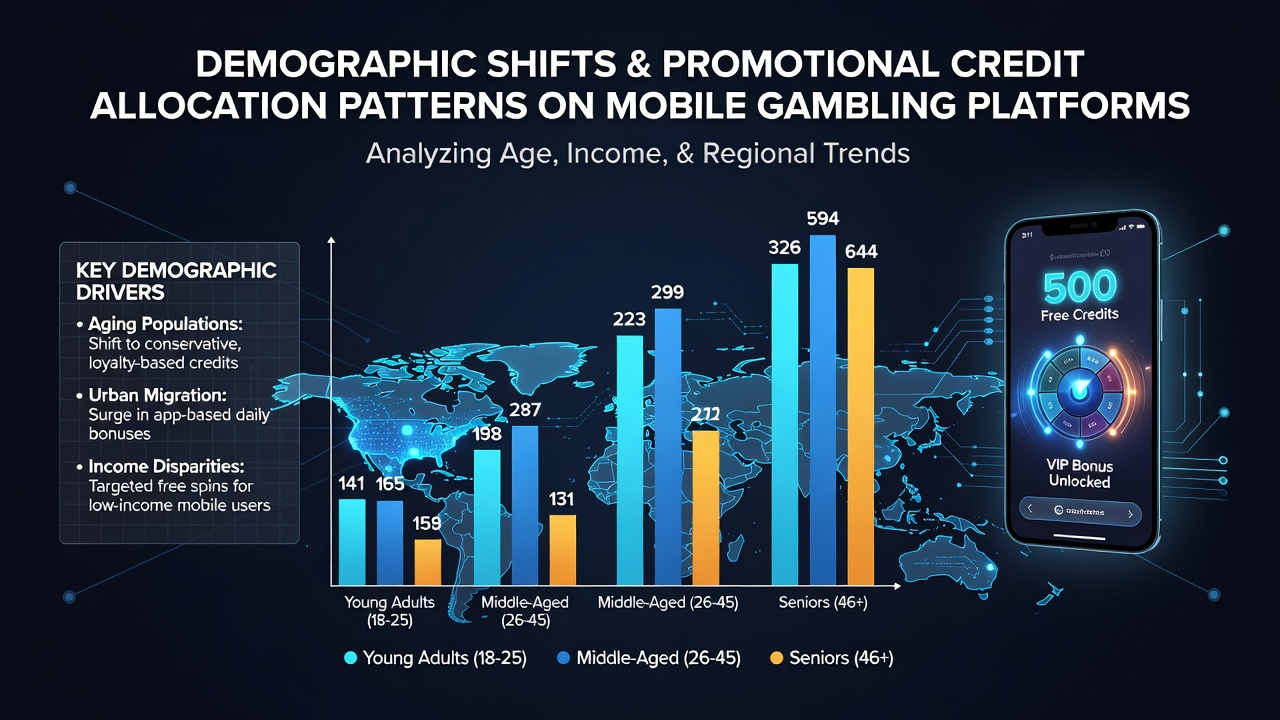
Data from multiple regulatory bodies shows that demographic changes have altered how mobile gambling operators distribute promotional credits, with platforms adjusting offers based on age, location, and income profiles. Operators track user registration details and behavioral patterns to refine these allocations, and recent figures from October 2026 indicate continued adaptation as younger cohorts enter the market at higher rates while older users maintain steady engagement.
Tracking Age-Based Distribution Trends
Operators segment users by age brackets because data reveals distinct preferences for credit types. Younger adults between 18 and 34 receive more frequent free spin credits and deposit match incentives on mobile apps, while those over 55 often see cashback credits and loyalty multipliers instead. Research indicates this split stems from observed session lengths and game selections, with platforms reallocating budgets accordingly each quarter.
Studies from academic institutions confirm that mobile-first users in the 25-40 range respond more readily to time-limited credits tied to specific slots or table games. In contrast, older demographics show higher redemption rates for ongoing balance boosts. Platforms adjust allocation algorithms quarterly to match these patterns without exceeding regulatory caps on promotional spend.
Regional Income Variations Shape Offer Structures
Income data combined with geographic indicators leads operators to modify credit values across different markets. Users in higher median income regions often receive larger absolute credit amounts, whereas lower income areas see smaller but more frequent micro-credits designed to extend play sessions. Government reports from Australian authorities highlight how these adjustments align with local spending patterns tracked through licensed operators.
Platforms operating across North America and Europe apply similar segmentation, drawing on census updates and player registration information. Those in urban centers with higher disposable income metrics receive bundled credits across multiple games, while rural user groups encounter simpler single-game offers. This approach maintains compliance with varying jurisdictional rules on bonus transparency.
Gender and Platform Interaction Patterns
Behavioral analytics show gender differences in how promotional credits are redeemed on mobile devices. Female users demonstrate stronger engagement with credits applied to live dealer formats and progressive jackpot titles, prompting operators to prioritize those categories in targeted campaigns. Male users more frequently activate credits on high-volatility slot titles, leading to corresponding inventory adjustments in promotional pools.
These observations come from aggregated session data rather than individual profiling, and operators use them to balance credit distribution across their user bases. Figures reveal steady growth in cross-gender credit types that blend elements from both patterns, particularly in markets where overall participation has expanded since 2024.
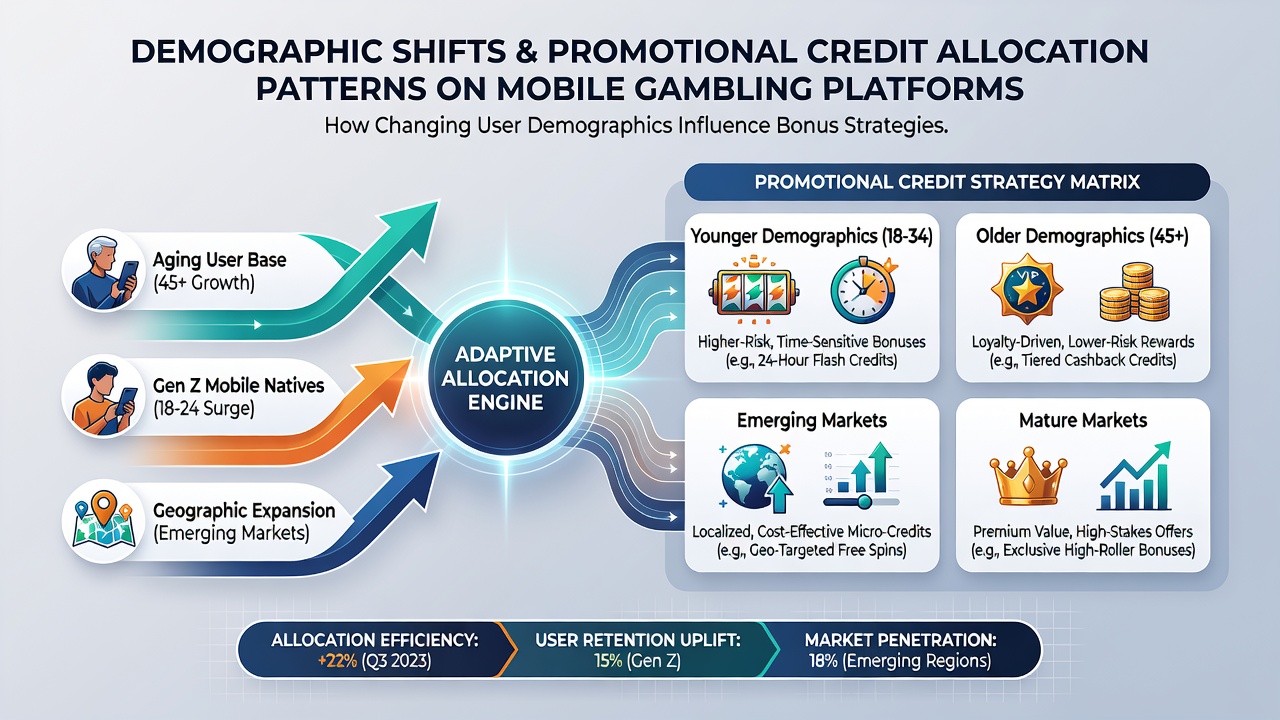
Technology and Data Integration in Allocation
Mobile platforms integrate real-time demographic signals into credit allocation engines, allowing dynamic adjustments based on registration updates and play history. When new user cohorts emerge, such as increased participation from specific ethnic or linguistic groups in bilingual regions, operators expand credit options to include localized game preferences. Industry reports from bodies like the American Gaming Association document these shifts through annual operator surveys.
Algorithms weigh multiple variables simultaneously, including device type, session frequency, and average deposit size. This produces allocation patterns that evolve monthly, with October 2026 data showing accelerated refinement following updates to mobile operating systems that improved tracking granularity.
Regulatory Frameworks Guide Demographic Targeting
Regional regulators require operators to document how promotional credits reach different demographic segments to prevent disproportionate targeting. Canadian provincial frameworks, for instance, mandate reporting on credit distribution by age and income brackets, while similar requirements appear in select European jurisdictions outside the UK. Compliance teams review allocation logs to ensure credits do not concentrate in ways that violate fairness standards.
These rules influence how platforms scale offers during peak registration periods, such as after major sporting events or seasonal promotions. Operators maintain internal dashboards that flag when any single demographic receives credits exceeding predefined thresholds.
Future Projections Based on Current Data
Projections drawn from ongoing research at institutions like the University of Nevada, Las Vegas suggest continued refinement of credit models as demographic compositions shift further through 2027. Mobile platforms will likely expand credit personalization tied to emerging user segments while maintaining aggregate spending limits set by regulators. Data collected through October 2026 already shows operators testing hybrid credit structures that blend elements across age and income lines.
Conclusion
Demographic shifts continue to reshape promotional credit allocation on mobile gambling platforms through data-driven segmentation and regulatory oversight. Platforms respond to age, income, gender, and regional patterns by adjusting offer types and values, supported by analytics that track redemption and engagement metrics. As user bases evolve, allocation systems adapt within established compliance boundaries, producing measurable changes in how credits reach different player groups across markets.